Sodium Channel
Na channels; Na+ channels
Sodium channels are integral membrane proteins that form ion channels, conducting sodium ions (Na+) through a cell's plasma membrane. They are classified according to the trigger that opens the channel for such ions, i.e. either a voltage-change (Voltage-gated, voltage-sensitive, or voltage-dependent sodium channel also called VGSCs or Nav channel) or a binding of a substance (a ligand) to the channel (ligand-gated sodium channels). In excitable cells such as neurons, myocytes, and certain types of glia, sodium channels are responsible for the rising phase of action potentials. Voltage-gated Na+ channels can exist in any of three distinct states: deactivated (closed), activated (open), or inactivated (closed). Ligand-gated sodium channels are activated by binding of a ligand instead of a change in membrane potential.
Sodium Channel Isoform Specific Products
-
Sodium Channel
(629)
View all products
-
Nav1.1
(11)
View all products
-
Nav1.2
(16)
View all products
-
Nav1.3
(14)
View all products
-
Nav1.4
(14)
View all products
-
Nav1.5
(21)
View all products
-
Nav1.6
(12)
View all products
-
Nav1.7
(62)
View all products
-
Nav1.8
(41)
View all products
-
Nav1.9
(2)
View all products
All Product Categories
-
Sodium Channel Inhibitors
(620)
View all products
-
Sodium Channel Agonists
(10)
View all products
-
Sodium Channel Antagonists
(30)
View all products
-
Sodium Channel Activators
(35)
View all products
-
Sodium Channel Modulators
(30)
View all products
-
Sodium Channel Controls
(5)
View all products
-
Sodium Channel Ligands
(3)
View all products
-
Productos relacionados con Sodium Channel (803)
Productos relacionados con (803)

-
Antibodies (9)
-
Related Compound Screening Libraries (1)
-
Sodium Channel Isoform Comparison
-
LTGO-33
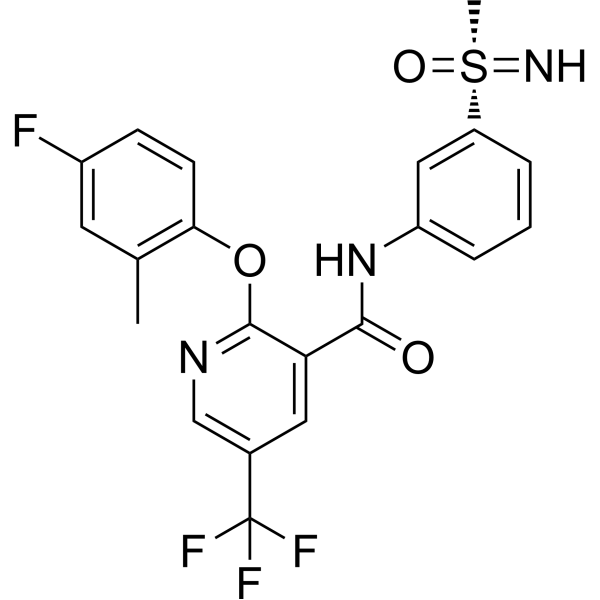 0 ImagesLTGO-33 is a potent and selective voltage-gated sodium channel NaV1.8 inhibitor. LTGO-33 inhibits NaV1.8 in the nM potency range and exhibits over 600-fold selectivity against human NaV1.1-NaV1.7 and NaV1.9. LTGO-33 exhibits state-independent inhibition with similar potencies on channels in the closed and inactivated conformations. LTGO-33 inhibits native TTX-R NaV1.8 currents in non-human primate and human DRG neurons, where it reduces action potential firing. LTGO-33 can be used for pain disorders research.
-
Flunarizine
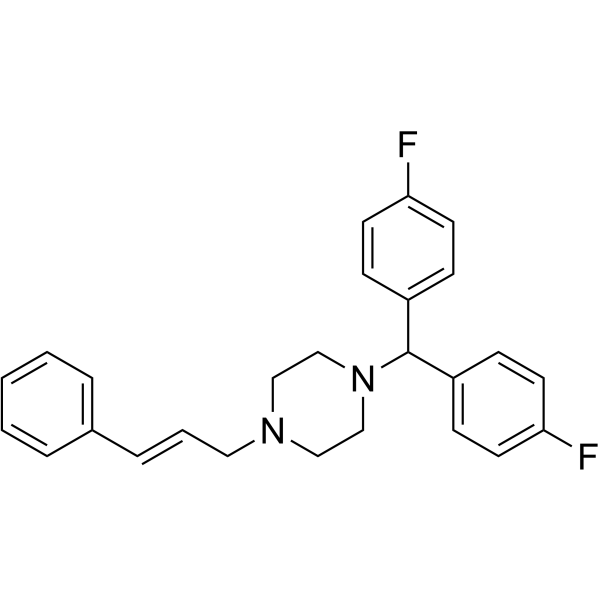 0 ImagesFlunarizine is a potent dual Na+/Ca2+ channel (T-type) blocker. Flunarizine is a D2 dopamine receptor antagonist. Flunarizine shows anticonvulsive and antimigraine activity, and peripheral vasodilator effects.
-
Dibucaine hydrochloride
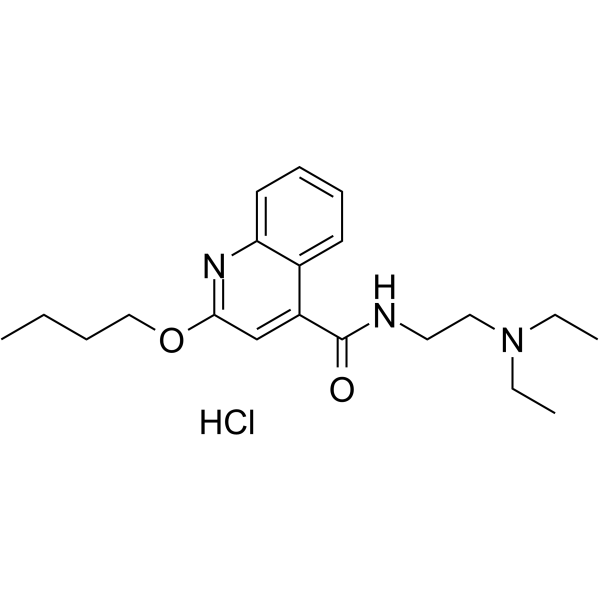 0 ImagesDibucaine hydrochloride (Cinchocaine hydrochloride) is a sodium channel inhibitor. Dibucaine hydrochloride is a potent SChE inhibitor.
-
NaPi2b-IN-2
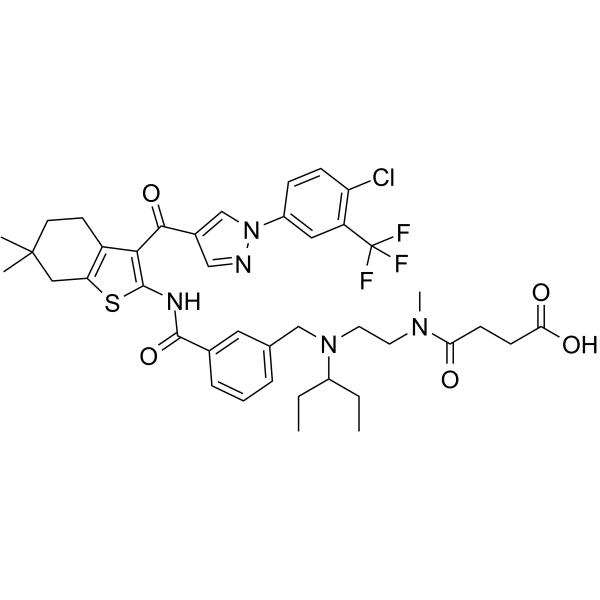 0 ImagesNaPi2b-IN-2 is a potent inhibitor of sodium-dependent phosphate transporter 2b (SLC34A2, NaPi2b), with an IC50 value of 38 nM against human NaPi2b. NaPi2b-IN-2 reduces intracellular phosphate levels and enhances innate immune gene expression. NaPi2b-IN-2 can be used in research related to hyperphosphatemia.
-
Carbamazepine-d10
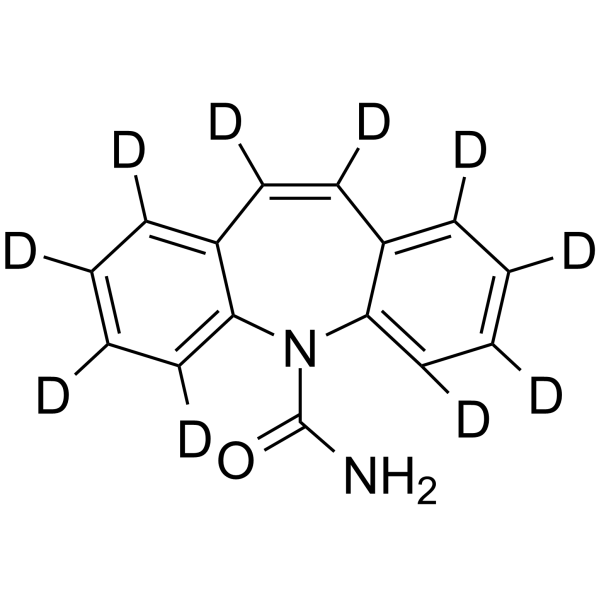 0 ImagesSynonyms: CBZ-d10; NSC 169864-d10Carbamazepine-d10 is the deuterium labeled Carbamazepine. Carbamazepine (CBZ), a sodium channel blocker, is an anticonvulsant agent.
-
Lidocaine hydrochloride hydrate
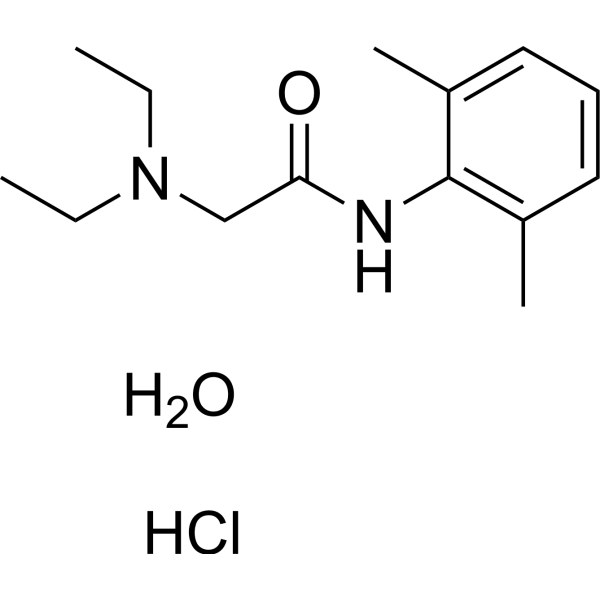 0 ImagesSynonyms: Lignocaine hydrochloride hydrateLidocaine (Lignocaine) hydrochloride hydrate inhibits sodium channels involving complex voltage and using dependence. Lidocaine hydrochloride hydrate decreases growth, migration and invasion of gastric carcinoma cells via up-regulating miR-145 expression and further inactivation of MEK/ERK and NF-κB signaling pathways. Lidocaine hydrochloride hydrate is an amide derivative and has potential for the research of ventricular arrhythmia.
-
Relutrigine
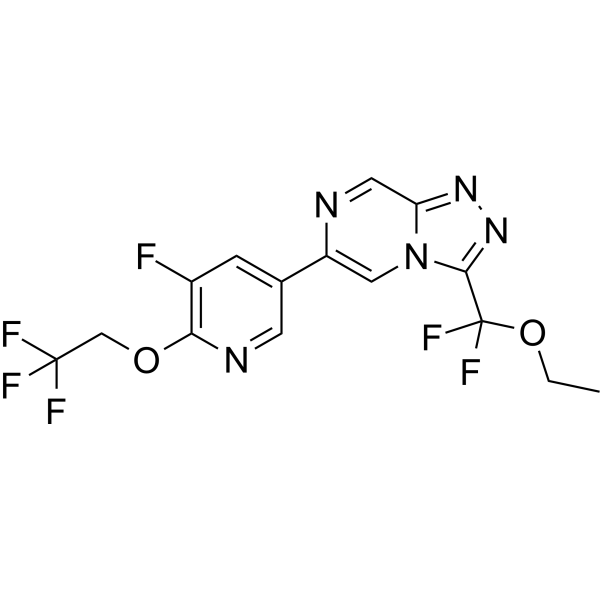 0 ImagesSynonyms: PRAX-562Relutrigine (PRAX-562) is an orally active inhibitor of persistent sodium channel. Relutrigine potently and preferentially inhibits persistent INa induced by ATX-II (Nav 1.5 activator) or the SCN8A mutation N1768D with IC50 values of 141 nM and 75 nM, respectively. Relutrigine exhibits potent use-dependent block and reduces neuronal intrinsic excitability. Relutrigine has effective anticonvulsant activity.
-
Nisoxetine hydrochloride
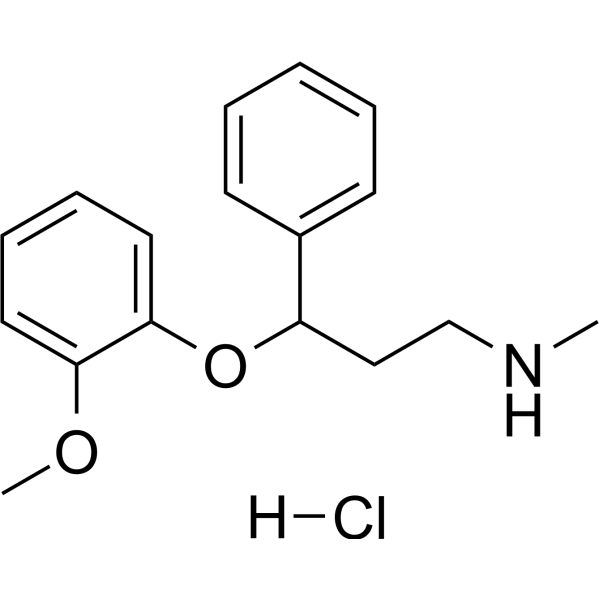 0 ImagesNisoxetine hydrochloride is a potent and selective inhibitor of noradrenaline transporter (NET), with a Kd of 0.76 nM. Nisoxetine hydrochloride is an antidepressant and local anesthetic, it can block voltage-gated sodium channels.
-
GDC-0276
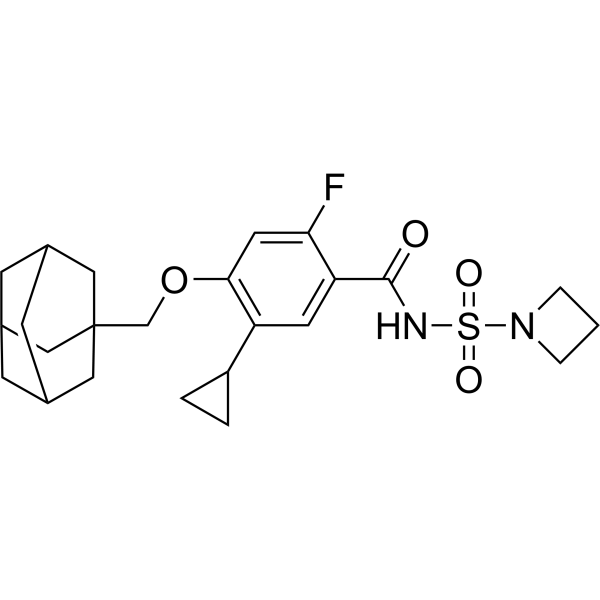 0 ImagesGDC-0276 is a potent, selective, reversible and orally active NaV1.7 inhibitor with an IC50 value of 0.4 nM. GDC-0276 is well tolerated and exhibits a good pharmacokinetic profile. GDC-0276 has the potential for the treatment of pain and to address shortcomings of existing pain medications, such as addiction and off-target side effects.
-
PF-06869206
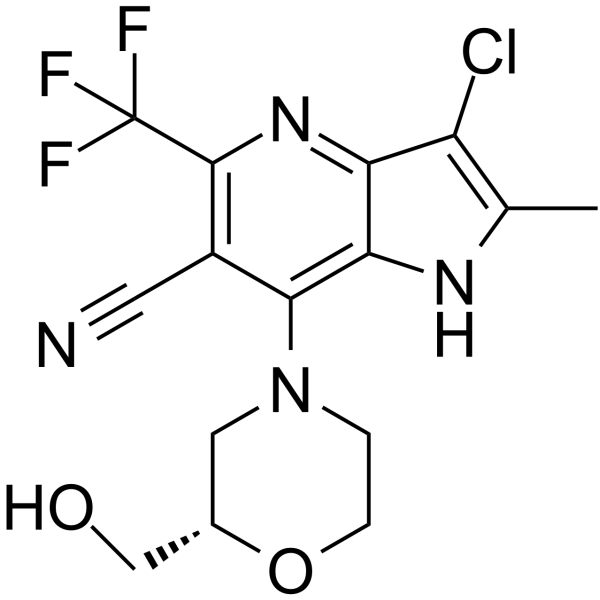 0 ImagesPF-06869206 is an orally bioavailable selective inhibitor of the sodium-phosphate cotransporter NaPi2a (SLC34A1) with an IC50 of 380 nM.
-
Fluphenazine
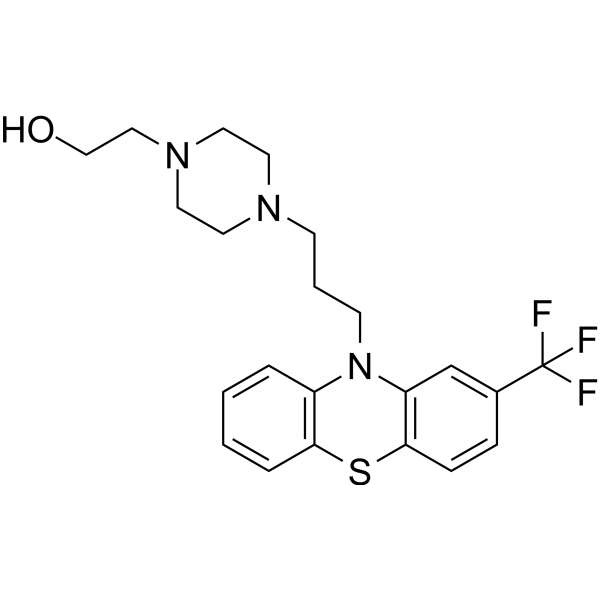 0 ImagesFluphenazine is a potent, orally active phenothiazine-based dopamine receptor antagonist. Fluphenazine blocks neuronal voltage-gated sodium channels. Fluphenazine acts primarily through antagonism of postsynaptic dopamine-2 receptors in mesolimbic, nigrostriatal, and tuberoinfundibular neural pathways. Fluphenazine can antagonize Methylphenidate-induced stereotyped gnawing and inhibit climbing behaviour in mice. Fluphenazine can be used for researching psychosis and painful peripheral neuropathy associated with diabetes and has potential to inhibit SARS-CoV-2.
-
Ropivacaine hydrochloride
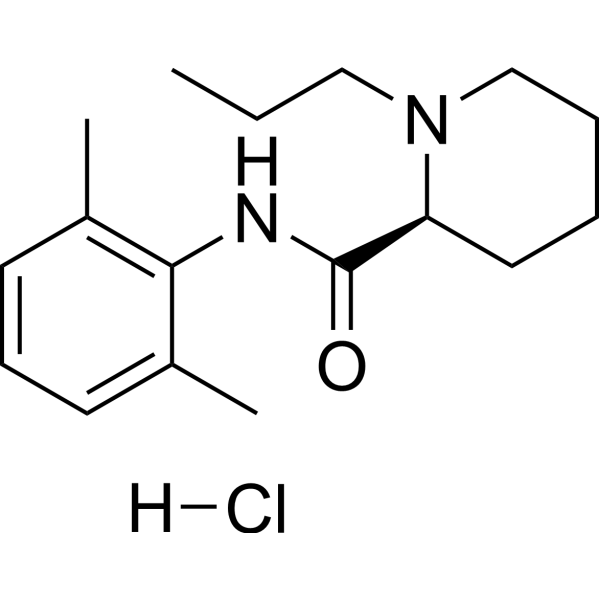 0 ImagesRopivacaine hydrochloride is a potent sodium channel blocker and blocks impulse conduction via reversible inhibition of sodium ion influx in nerve fibrese. Ropivacaine is also an inhibitor of K2P (two-pore domain potassium channel) TREK-1 with an IC50 of 402.7 μM in COS-7 cell's membrane. Ropivacaine is widely used for neuropathic pain management in vivo.
-
Amiloride hydrochloride (Standard)
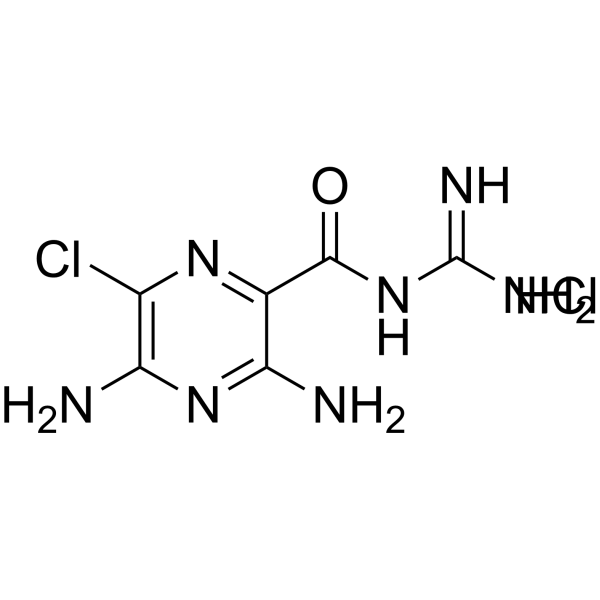 0 ImagesSynonyms: MK-870 hydrochloride (Standard)Amiloride (hydrochloride) (Standard) is the analytical standard of Amiloride (hydrochloride). This product is intended for research and analytical applications. Amiloride hydrochloride (MK-870 hydrochloride) is an inhibitor of both epithelial sodium channel (ENaC) and urokinase-type plasminogen activator receptor (uTPA). Amiloride hydrochloride is a blocker of polycystin-2 (PC2; TRPP2) channel.
-
Amiloride hydrochloride dihydrate
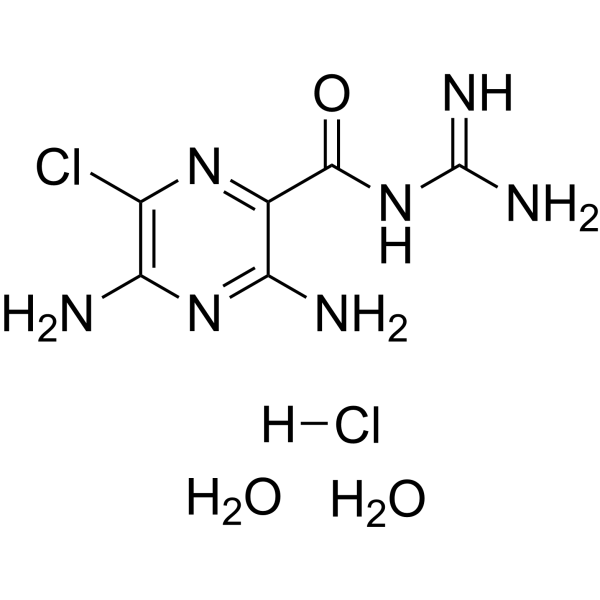 0 ImagesSynonyms: MK-870 hydrochloride dihydrateAmiloride hydrochloride dihydrate (MK-870 hydrochloride dihydrate) is an inhibitor of both epithelial sodium channel (ENaC) and urokinase-type plasminogen activator receptor (uTPA). Amiloride hydrochloride dihydrate is a blocker of polycystin-2 (PC2; TRPP2) channel.
-
Dibucaine
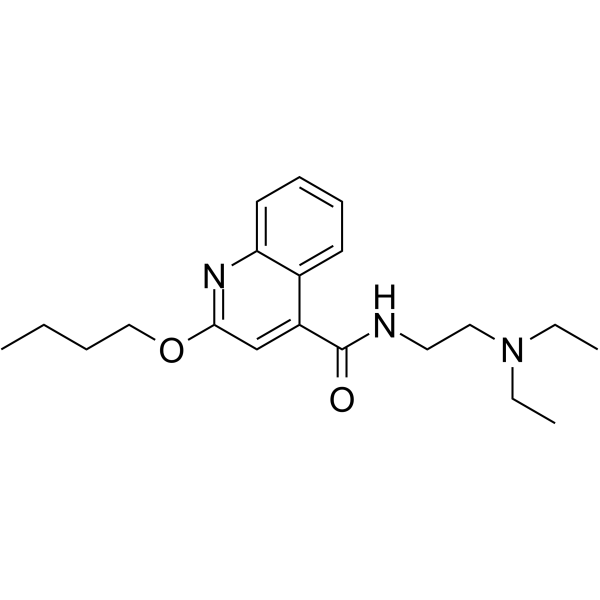 0 ImagesDibucaine (Cinchocaine) is a sodium channel inhibitor. Dibucaine is a potent SChE inhibitor.
-
Raxatrigine hydrochloride
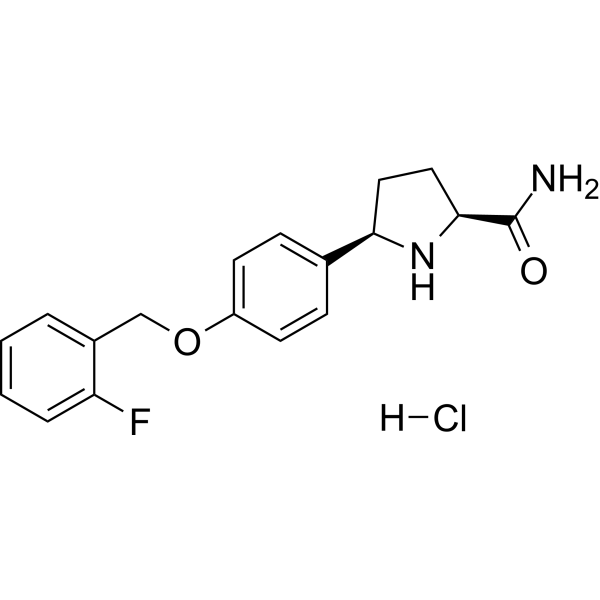 0 ImagesSynonyms: Vixotrigine hydrochloride; GSK-1014802 hydrochloride; CNV1014802 hydrochlorideRaxatrigine hydrochloride (GSK-1014802 hydrochloride) is a novel small molecule state-dependent sodium channel blocker; Nav1.7 sodium channel inhibitor.
-
XPC-5462
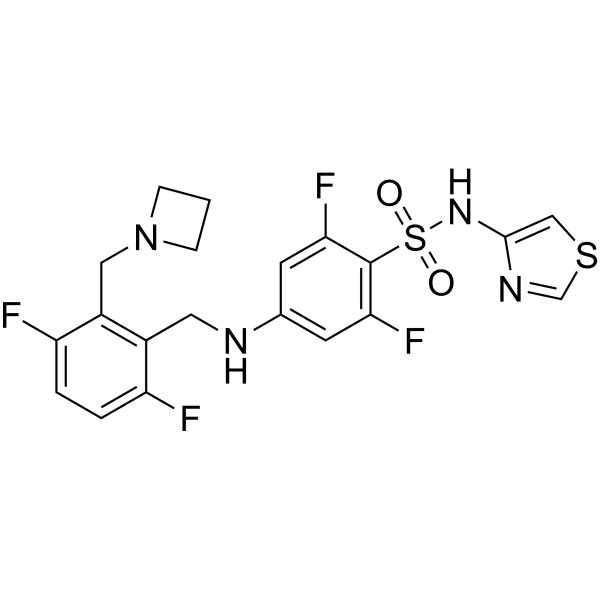 0 ImagesXPC-5462 is a selective NaV1.6/1.2 inhibitor, with an IC50 of 0.0103 μM against hNaV1.6, 0.0137 μM against mNaV1.6, and 0.0109 μM against hNaV1.2. XPC-5462 significantly reduces epileptiform discharges. XPC-5462 is applicable for epilepsy-related research.
-
Carbamazepine (Standard)
 0 ImagesSynonyms: CBZ (Standard); NSC 169864 (Standard)Carbamazepine (Standard) is the analytical standard of Carbamazepine. This product is intended for research and analytical applications. Carbamazepine is an orally active pressure-sensitive sodium ion channel blocker with an IC50 of 131 μM. Carbamazepine blocks voltage gated Na+, Ca2+, and K+ channels, and is also a HDAC inhibitor (IC50: 2 μM). Carbamazepine is an anticonvulsant and can be used for research of epilepsy and neuropathic pain.
-
Lidocaine-d10
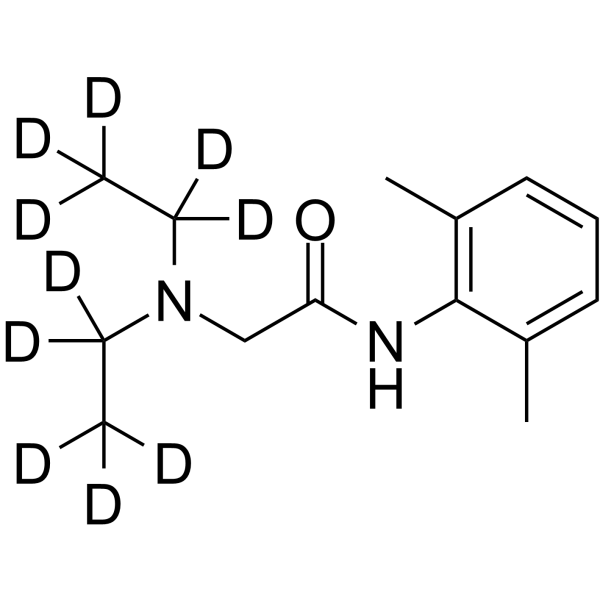 0 ImagesLidocaine-d10 is the deuterium labeled Lidocaine. Lidocaine (Lignocaine) inhibits sodium channels involving complex voltage and using dependence. Lidocaine decreases growth, migration and invasion of gastric carcinoma cells via up-regulating miR-145 expression and further inactivation of MEK/ERK and NF-κB signaling pathways. Lidocaine is an amide derivative and has potential for the research of ventricular arrhythmia.